 Pay Online
 Patient Portal
Common Summer Skin Conditions and How to Treat Them
Summer brings long days and warm weather, but it can also bring a fresh set of skin challenges. Higher temperatures, increased sun exposure, and more time spent outdoors create the perfect conditions for sunburn, rashes, breakouts, and more. Knowing what to watch for and when to seek care can help you protect your skin all season long.
Sunburn
Sunburn is one of the most common summer skin concerns, and one of the most important to take seriously. Each sunburn causes cumulative damage to skin cells, increasing the risk of premature aging and skin cancer over time. According to the Skin Cancer Foundation, having more than five sunburns in your lifetime more than doubles your risk of developing melanoma.
The best way to prevent sunburn includes:
- Consistent sunscreen use of broad-spectrum SPF 30 or higher
- Seeking shade during peak sun hours (10am to 4pm)
- Wear protective clothing, wide-brimmed hats, and UV-blocking sunglasses
Heat Rash
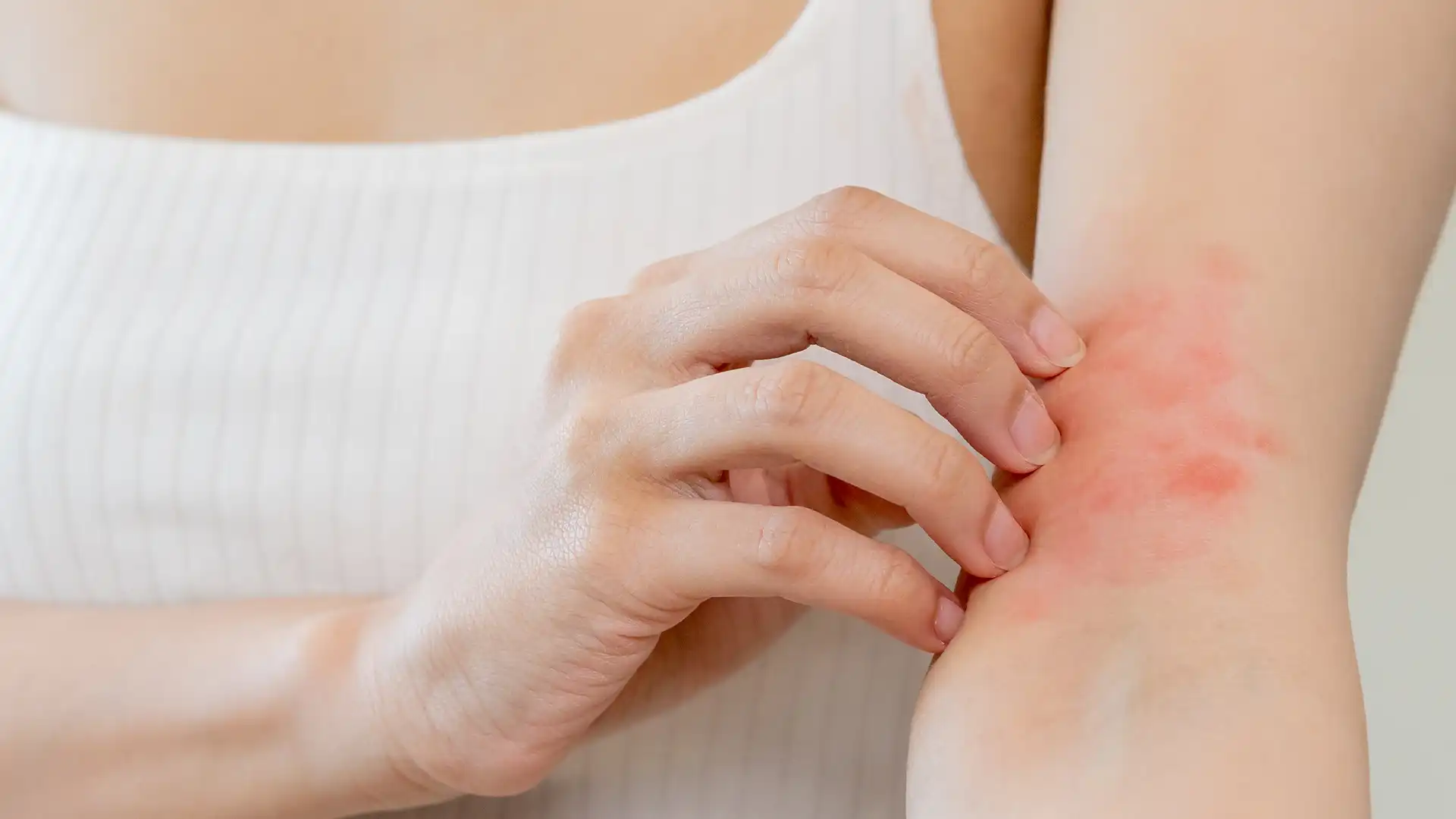
When heat and humidity cause you to sweat heavily, sweat ducts can become blocked, trapping perspiration beneath the skin. The result is heat rash, clusters of small, red bumps that produce a prickly or stinging sensation.
Heat rash most often appears in areas where skin folds or where clothing fits closely, including the neck, chest, back, underarms, and groin. Tips for relief include:
- Moving to a cool, air-conditioned environment
- Wearing lightweight, breathable fabrics
- Applying a cool compress or taking a cool shower
- Using over-the-counter hydrocortisone cream
Summer Acne Breakouts
Breakouts tend to get worse in summer, and there are a few good reasons why. Heat and humidity increase oil production, while sweat can mix with bacteria and dead skin cells to clog pores.
To reduce summer breakouts, cleanse your skin promptly after sweating, opt for oil-free or noncomedogenic sunscreens and moisturizers, and avoid touching your face with unwashed hands. If over-the-counter products aren’t helping, a board-certified dermatologist can recommend prescription options tailored to your skin’s needs.
Fungal Skin Infections
Warm, moist conditions are exactly what fungi need to thrive, making summer the peak season for fungal skin infections. Some of the most common include:
- Athlete’s foot (tinea pedis)
- Ringworm (tinea corporis)
- Jock itch (tinea cruris)
- Tinea versicolor
Keeping skin clean and dry, changing out of wet clothing promptly, and wearing shower shoes in communal areas can help prevent them.
Contact Dermatitis & Plant Rashes
More time outdoors in summer means more opportunities for skin to come into contact with irritants and allergens, including plants. Poison ivy and poison oak are among the most common culprits. Both contain an oil called urushiol that triggers an allergic reaction in most people, producing a red, intensely itchy, blistering rash.
Mild reactions can be treated with over-the-counter antihistamines and hydrocortisone cream, while severe rashes may require a prescription-strength topical steroid or oral steroid course.
Why Skin Issues Are More Common in Summer
Summer creates a near-perfect environment for skin problems to flare. A few factors work together to raise the risk:
- Heat increases sweat production and oil secretion
- UV exposure is more intense and more frequent
- Humidity keeps skin damp, which favors fungal and bacterial growth
- Outdoor activities bring more contact with plants, insects, chlorine, and other irritants
For people with underlying skin conditions like eczema, rosacea, or psoriasis, summer can also bring flares.
Signs to See a Dermatologist
Many summer skin concerns can be managed at home, but some warrant a professional evaluation. Contact a dermatologist if you notice any of the following:
- A rash that does not improve within a week or two, or that keeps coming back
- Blistering, oozing, or signs of skin infection such as warmth, swelling, or pus
- A mole or spot that changes in size, shape, or color, or that bleeds without injury
- New or unusual skin lesions after significant sun exposure
- Persistent breakouts that are not responding to over-the-counter products
Summer is also an ideal time to schedule your annual full-body skin exam. Early detection is the single most important factor in skin cancer outcomes.
Receive Summer Skin Care With Board-Certified Dermatologists
Anne Arundel Dermatology is here to help you navigate every season with healthy, comfortable skin. Whether you are managing a summer flare-up, concerned about a suspicious spot, or ready for your annual skin exam, schedule online today to get the care your skin needs this summer.
Key Takeaways
- Sunburn causes lasting skin damage, so be sure to apply broad-spectrum SPF 30+ daily and reapply every two hours.
- Heat rash results from blocked sweat ducts and typically resolves with cool compresses and breathable clothing.
- Summer breakouts are often driven by sweat, increased oil production, and pore-clogging products; opt for noncomedogenic formulas.
- Keep skin dry, as fungal infections thrive in warm, moist environments.
- Plant rashes like poison ivy require prescription treatment for significant reactions.
- Any rash that persists, worsens, or is accompanied by infection symptoms warrants a dermatologist visit.
- An annual full-body skin exam is one of the most important things you can do for your long-term skin health.